I remember burning the bottom of orzo the first time I tried a one-pan dinner and ending up with unevenly cooked pasta and a watery sauce — so I rebuilt this recipe to be predictable for busy weeknights. The best orzo dinner starts with a quick toast of the pasta, uses a single 12-inch skillet, and finishes by folding in a small amount of grated Parmesan and a touch of cream for a reliably creamy finish without long simmering. If you want a practical, under-30-minute meal that behaves on the stove, this recipe delivers.
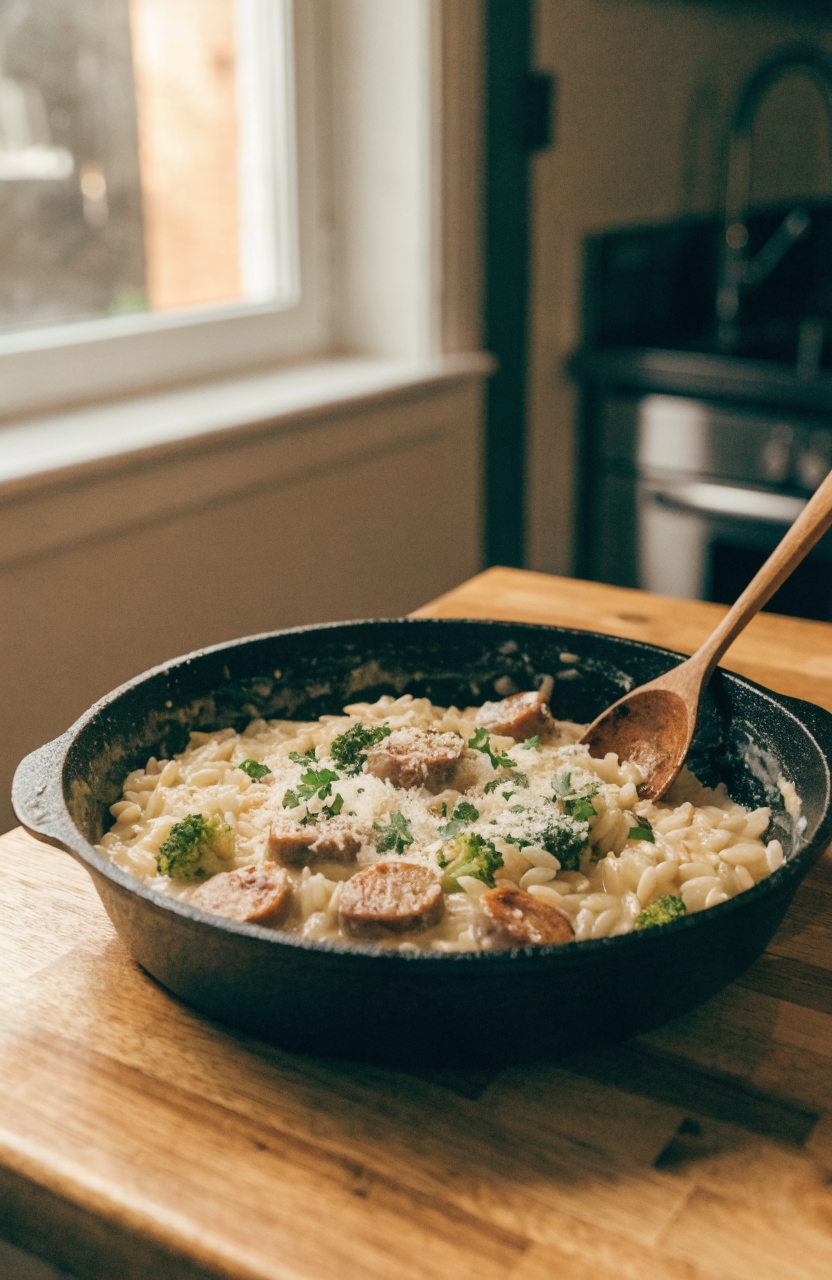
Why this best orzo dinner works
The trick that made this version reliable is two-fold: toast the orzo briefly in oil to develop nuttiness and reduce the tendency to become gluey, and measure the liquid carefully so the final texture hits creamy without long absorption time. I reduced the liquid-to-orzo ratio compared with many one-pot recipes and combined gentle simmering with frequent stirring in the last 6 minutes; that gives evenly cooked grains and keeps the sauce from separating. I also brown the chicken sausage separately just enough to render flavor but not to overcook it, then return it to the pan late so the meat stays juicy. During testing I learned to add the Parmesan off heat so it melts into a silky coating instead of clumping.
Key takeaways
- Toast orzo first to prevent gummy texture and add flavor.
- Use a precise liquid ratio and a short, monitored simmer for creamy consistency.
- Finish with cheese off heat and a small splash of cream or reserved pasta water for silkiness.
Ingredients you’ll need and what to substitute
This recipe uses everyday pantry items and a handful of fresh ingredients you can pick up at most grocery stores. I like mild Italian chicken sausage for quick cooking and easy seasoning; turkey sausage or sliced cooked rotisserie chicken work if you prefer. For a vegetarian swap, use firm cubes of extra-firm tofu or a plant-based sausage substitute and increase the salt slightly. The Parmesan adds umami and creaminess — Pecorino Romano will work but is saltier so reduce added salt by 1/4 teaspoon. If you don’t have heavy cream, reserve 1/4 cup of the cooking liquid and whisk it with the cheese to create the same glossy finish.
Equipment
You only need a few commonly available items: a 12-inch skillet with lid (large rimmed skillet works too), a wooden spoon or heatproof spatula, a chef’s knife, and a measuring cup. The 12-inch skillet capacity is important; a smaller pan will overcrowd the orzo and change cooking time. If you don’t have a lid that fits, cover the pan with foil to trap steam for the brief simmer.
How to make the best orzo dinner
Prep and toast
Start by slicing the sausage and chopping the aromatics so everything is ready because the stovetop moves quickly. Heat 1 tablespoon of olive oil over medium heat in the 12-inch skillet until it shimmers. Add the dry orzo and toast, stirring constantly, for about 2 minutes until the edges are pale gold and smell nutty — this step is the part that prevents gummy orzo later.
Build flavor
Push the toasted orzo to one side of the skillet, add the remaining 1 tablespoon of oil, then add diced onion and cook 2–3 minutes until translucent. Stir in minced garlic and cook 30 seconds until fragrant. Add the sliced chicken sausage and let it brown for 2–3 minutes, turning pieces to get color without overcooking. Deglaze briefly with 1/4 cup low-sodium chicken broth if there are browned bits; this also helps lift flavor into the orzo.
Simmer to finish
Add the measured remaining 2 1/2 cups chicken broth and 1/2 cup finely chopped broccoli florets (or spinach if you prefer), bring to a gentle boil over medium-high heat, then reduce to a steady simmer and cover. Set a timer for 8 minutes and stir every 2 minutes during that time, scraping the bottom and monitoring liquid level. At the 8-minute mark the orzo should be nearly tender but with a slight bite; if it looks dry, add up to 2 tablespoons more broth. Remove the pan from heat.
Finish for creaminess
Off heat, stir in 1/3 cup grated Parmesan, 2 tablespoons heavy cream, and 1 tablespoon butter. Stir vigorously for 30–60 seconds until the cheese melts into a glossy coating and the sauce clings to the orzo. Taste and season with salt and pepper. Let the pan stand uncovered 2 minutes so the sauce settles — the orzo will give a final second of tenderness as it rests.
Things I learned the hard way
- Don’t skip toasting the orzo — my first batch turned gluey and flat; toasting solved that completely.
- If you add the cheese on the heat, it can clump or separate; always add Parmesan off heat and whisk quickly.
- Overcrowding the pan makes the liquid take longer to come to a boil and changes texture; use a 12-inch skillet or halve the batch.
- Broccoli florets added whole will stay too firm; chop small so they cook in the short simmer time.
- If the dish looks dry at the end, add small amounts of hot broth or reserved pasta water — avoid cold liquids which pause cooking.
Variations to try
Try lemon-parmesan: add the zest of one lemon with the Parmesan and finish with 1 tablespoon lemon juice for a bright lift; no timing change needed. For a tomato version: stir in 1/2 cup cherry tomatoes halved at the 4-minute mark and finish with 1/4 cup shredded mozzarella instead of cream. For a vegetarian twist: use vegetable broth and add 1 cup sliced mushrooms browned first; add the mushrooms back with the broth and proceed as written.
Extra tips for consistently creamy results
Small details matter when you want a consistently creamy one-pan meal. Use hot broth when adding extra liquid so the orzo continues to cook without dropping the pan temperature; cold liquid slows cooking and can cause inconsistent texture. Keep a close eye during the final simmer and stir frequently to prevent sticking and to encourage even absorption. When you remove the pan from the heat, fold the cheese and cream in gently but thoroughly so the starches and dairy bind into a silky sauce rather than separate.
For a slightly richer finish without more cream, reserve 2 tablespoons of the hot cooking liquid before draining or removing from heat, then whisk that with the Parmesan as you add it to the orzo. That technique gives a glossy finish and reduces the need for extra dairy, while preserving the flavor balance that makes this the best orzo dinner for many home cooks.
Storage, freezing, and reheating
Refrigerate leftovers in an airtight container for up to 3 days. The orzo firms as it cools; when reheating, add 1–2 tablespoons water or broth per serving and reheat gently in a skillet over medium-low, stirring until the sauce loosens. Freezing is not recommended — the cream and cheese change texture when frozen and thawed. If you must, freeze up to 1 month and thaw overnight in the refrigerator, then reheat slowly with added liquid.
What to serve with the best orzo dinner
Pair this orzo with a simple green salad tossed with vinaigrette, garlic-roasted green beans, or warm crusty bread for soaking up any remaining sauce. For a lighter meal, serve with lemony arugula dressed in olive oil and lemon juice. These sides keep the meal quick and match the straightforward, efficient weeknight approach.
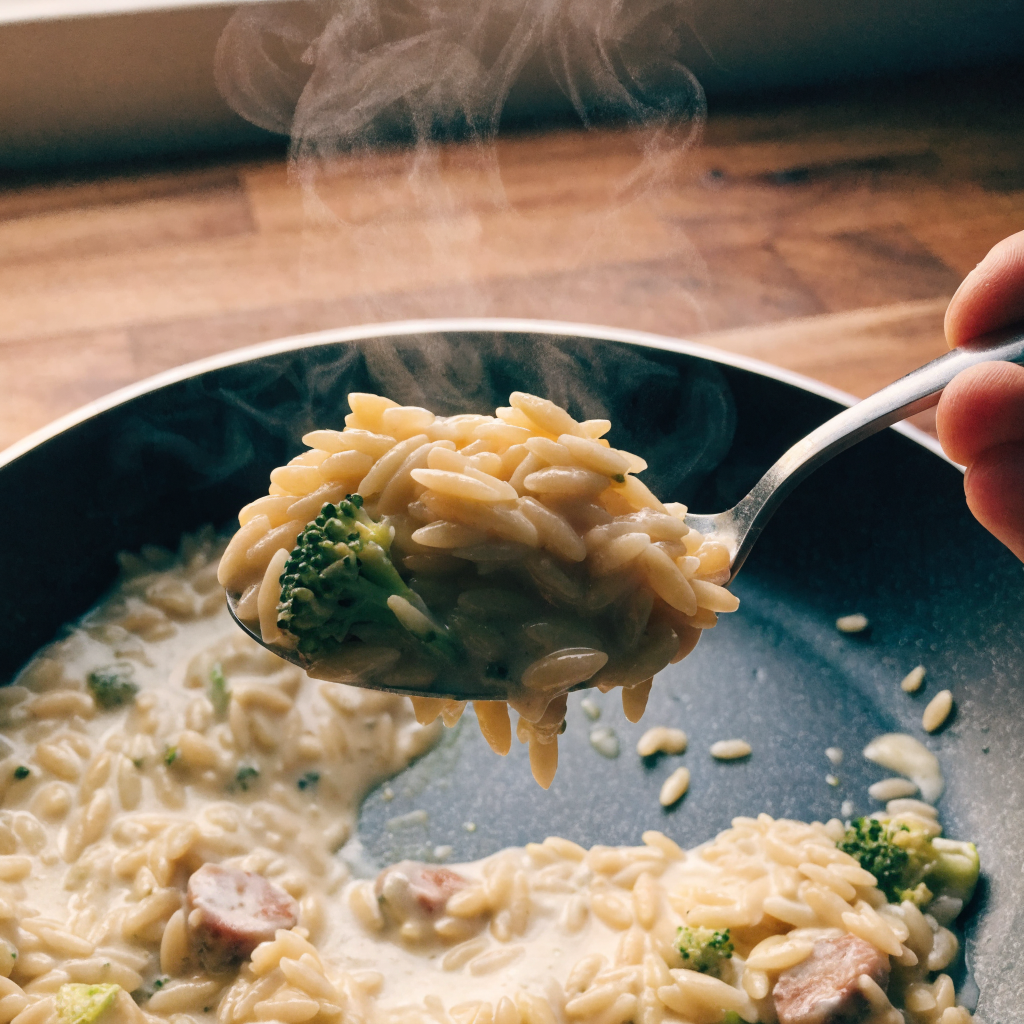

One-Pan Creamy Orzo Dinner with Chicken Sausage and Broccoli
Ingredients
Equipment
Method
- Slice the chicken sausage, finely chop the broccoli into small florets, dice the onion, and mince the garlic so everything is ready before you heat the pan.
- Heat 1 tablespoon olive oil in a 12-inch skillet over medium heat until shimmering; add the dry orzo and toast, stirring constantly, for 1½–2 minutes until edges are pale gold and fragrant.
- Push the toasted orzo to one side, add the remaining 1 tablespoon olive oil, then add the diced onion and cook 2–3 minutes until translucent; stir in the minced garlic and cook 30 seconds.
- Add the sliced chicken sausage and cook 2–3 minutes until pieces are lightly browned, turning them so they color without overcooking; if the pan has heavy brown bits, pour in 1/4 cup chicken broth to deglaze.
- Add the remaining 2 1/2 cups chicken broth and the chopped broccoli, increase heat to bring to a gentle boil, then reduce to a steady simmer and cover; simmer 8 minutes, stirring every 2 minutes and scraping the bottom.
- If the orzo looks dry before it’s tender, add up to 2 tablespoons more hot broth and continue simmering until al dente.
- Remove the skillet from heat and stir in the butter, Parmesan, heavy cream, and lemon juice if using; stir vigorously until the cheese melts into a glossy coating. Season with salt, pepper, and red pepper flakes if desired.
- Let rest uncovered 2 minutes for the orzo to finish tenderizing, then garnish with chopped parsley if using and serve immediately.
Notes
Frequently asked questions
Can I use dried pasta other than orzo? Yes, small shapes like acini di pepe or orzo-sized risoni work similarly, but cooking times may vary by brand; follow the same toast-and-simmer method and test for doneness at 6–8 minutes.
Why is my orzo gummy? If orzo becomes gummy it usually means it wasn’t toasted and the liquid ratio or stirring was off; start by toasting and stick closely to the measured liquid and stirring schedule here.
Can I make this ahead? You can make components ahead — cook and refrigerate the orzo separate from the sausage and vegetables up to one day; reheat together in a skillet with 2–3 tablespoons broth to loosen the sauce.
Is the dish freezer-friendly? Not recommended because cream and cheese change texture when frozen; refrigerated leftovers for up to 3 days are best.
Can I use raw chicken instead of sausage? You can substitute small diced chicken breast but brown it first in the skillet and ensure pieces reach 165°F internal temperature; adjust timing so chicken cooks through before adding the broth.
Closing
The best orzo dinner I make is the version I can pull together between finishing a load of laundry and getting everyone seated — the toasted orzo and measured simmer give dependable texture, and finishing off heat with cheese keeps things silky. With a few practical tricks — hot broth for adjustments, small broccoli pieces, and off-heat finishing — this dish reliably produces a creamy, comforting skillet meal that feels special but takes minimal effort.

Leave a Reply