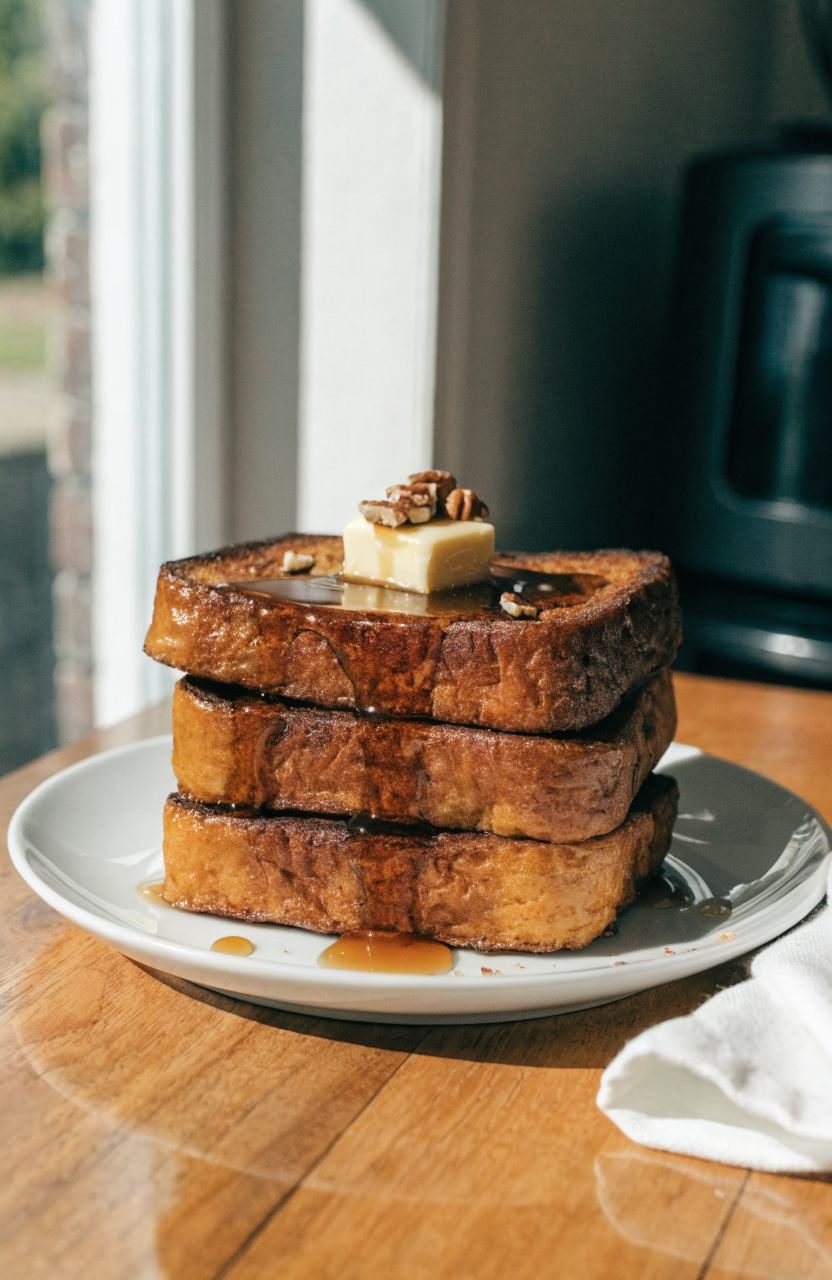
The first time I made pumpkin French toast I ended up with a soggy center and a scorched exterior — classic rookie mistake. I wanted the pumpkin flavor and custardy texture without the collapse, so I tested bread thickness, custard ratios, and a quick pan-sear method until the slices held their shape and still felt tender inside. This pumpkin French toast is my efficient fall breakfast: the pumpkin French toast custard is slightly thinner than some recipes, the soak time is short, and a hot skillet finish gives even browning without long standing time on the griddle.
Why this pumpkin French toast works
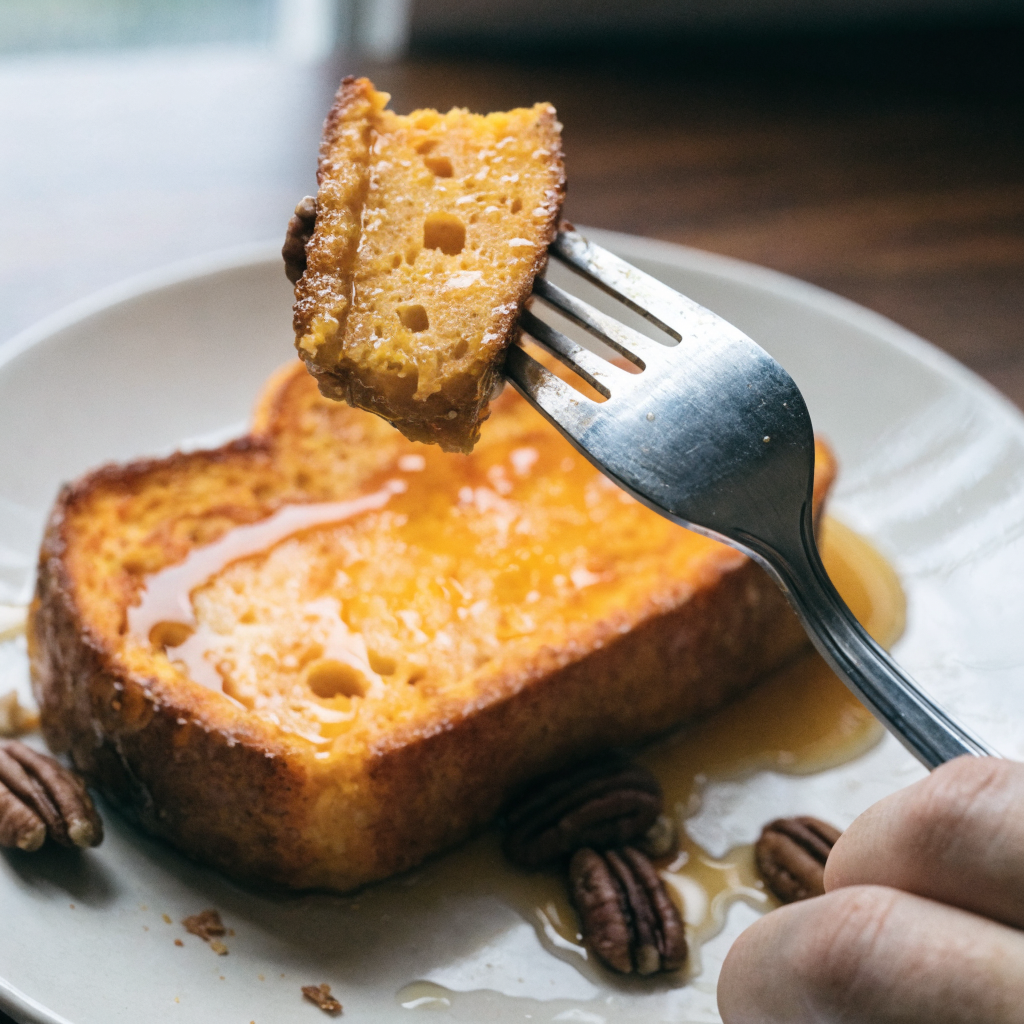
The key technique is controlling moisture: pumpkin puree is delicious but contains water that can make soaked bread soggy. I balance pumpkin with extra milk and an extra egg white to give structure without heaviness. Instead of a long soak, the bread gets a quick dip so the center becomes custardy without turning mushy. A hot, lightly greased skillet and finishing in the oven for very thick slices prevents the outside from overbrowning while the interior finishes gently. During testing I found standard ratios left the center undercooked with Texas-style thick bread — increasing the egg proteins and shortening the soak fixed that.
Key takeaways
- Short soak time and a slightly thinner custard prevent soggy centers.
- Extra egg white and a hot skillet give structure and even browning.
- Finish very thick slices briefly in a warm oven to avoid burnt exteriors.
Ingredients you’ll need and what to substitute
This recipe uses plain canned pumpkin puree for consistency, whole milk for richness, and slightly day-old bread for texture. Important choices: use 1/2-inch to 1-inch-thick slices of sturdy bread (brioche, challah, or Texas loaf) so the slices hold the custard. If you want a lighter texture, swap half the whole milk for half-and-half. For a dairy-free option, use full-fat canned coconut milk — expect a coconut undertone and slightly different browning behavior. If you don’t have pumpkin pie spice, use 1 teaspoon ground cinnamon plus 1/8 teaspoon ground nutmeg and a pinch of ground ginger.
Two budget-friendly swaps: use store-brand canned pumpkin and sandwich loaf slices instead of brioche; increase the soak time by 30–60 seconds if the bread is very dense. If you prefer a sweeter custard, add up to 2 tablespoons of brown sugar; for a more savory profile, reduce sugar to 1 tablespoon and add a pinch of salt.
Equipment
You’ll need a large shallow dish for dipping, a 12-inch nonstick or well-seasoned cast-iron skillet, and a rimmed baking sheet with a wire rack (8.5×11-inch or similar) if finishing in the oven for thick slices. A small whisk or fork and an instant-read thermometer are useful; the thermometer helps confirm the center reaches about 145–150°F for a set custard without overcooking.
How to make pumpkin French toast
Make the pumpkin custard
Whisk the pumpkin puree, whole milk, eggs, an extra egg white, vanilla extract, pumpkin pie spice, brown sugar, and a pinch of salt in a large shallow dish until smooth. The custard should be pourable but slightly thicker than plain French toast batter because of the pumpkin. If it’s very thick, add 1–2 tablespoons of extra milk so the bread can absorb easily without clumping.
Prep the bread and preheat
Arrange thick bread slices in a single layer and preheat a 12-inch skillet over medium-high heat with 1 tablespoon of butter and 1 tablespoon of neutral oil (this mix helps prevent burning). If your slices are over 3/4 inch thick, preheat the oven to 275°F and place a wire rack on a rimmed baking sheet to keep finished slices warm while you cook the rest.
Soak and cook
Working with one slice at a time, dip each slice into the custard for about 6–8 seconds per side — you want the interior lightly moistened but not dripping. Let excess drip off briefly and place the slice in the hot skillet. Cook 2–3 minutes per side until deeply golden and crisp; lower the heat slightly if the exterior browns too fast. For very thick slices, after browning both sides, transfer to the warm oven for 4–6 minutes to finish through without burning the outside. For thinner slices, skip the oven and cook entirely on the stovetop.
Serve immediately with butter and real maple syrup, or save time by keeping cooked slices on the wire rack in the 275°F oven for up to 15 minutes while you finish the batch.
Things I learned the hard way
- If the custard is too thick the bread soaks unevenly — thin it slightly with milk so absorption is even.
- Using only butter in the pan makes the exterior brown too quickly; a butter + neutral oil mix prevents burning.
- Over-soaking turns the center gummy — stick to a quick 6–8 second dip for 3/4- to 1-inch slices.
- First attempt: I used frozen bread straight from the freezer and the center stayed raw; the fix was thawing to room temperature and reducing soak time by a second or two.
- If your exterior is dark but the center is underdone, lower the stovetop heat and finish in a warm oven for thick slices.
Variations to try
- Spiced-pecan crunch: after browning, sprinkle chopped toasted pecans mixed with a tablespoon of melted butter and a teaspoon of brown sugar on top and broil 30–45 seconds for a crunchy topping. Watch closely.
- Maple cream: fold 1/3 cup plain yogurt into 2 tablespoons of maple syrup and dollop on serving for a tangy counterpoint; no timing change needed.
- Apple-pumpkin layer: top each soaked slice with a thin layer of sautéed apple slices (1 small apple, 1 teaspoon butter, 1 teaspoon cinnamon) before flipping, and reduce stovetop time by 30 seconds per side as the apples add moisture.
- Make it dairy-free: use full-fat canned coconut milk and coconut oil for the skillet; the custard will brown more slowly and have a subtle coconut flavor.
Storage, freezing, and reheating
Refrigerate leftovers in an airtight container for up to 3 days. To reheat, place slices on a rimmed baking sheet in a single layer and bake at 350°F for 8–12 minutes until warmed through and the exterior regains some crispness; flip halfway. Avoid microwaving when possible — it makes slices gummy. This recipe freezes well: place cooled slices between parchment sheets in a freezer-safe bag and freeze for up to 2 months. Reheat from frozen at 350°F for 12–16 minutes, flipping once, or thaw in the refrigerator overnight and reheat as above.
What to serve with pumpkin French toast
Useful pairings include a simple mixed-green salad with apple vinaigrette for a brunch that balances sweetness, stovetop turkey sausage links for protein, a yogurt parfait for contrast in texture, warm spiced apples for a seasonal match, or a pot of strong coffee or black tea. These sides are quick and fit a busy morning.

Pumpkin French Toast with Quick Pan-Sear Finish
Ingredients
Equipment
Method
- In a large shallow dish whisk together pumpkin puree, whole milk, eggs, egg white, vanilla, pumpkin pie spice, brown sugar, and salt until smooth and pourable; thin with 1–2 tablespoons extra milk if very thick.
- Preheat a 12-inch skillet over medium-high heat and add 1 tablespoon butter plus 1 tablespoon oil; if your bread slices are thicker than 3/4 inch, preheat oven to 275°F and place a wire rack on a rimmed baking sheet to keep finished slices warm.
- Dip each bread slice into the custard 6–8 seconds per side, letting excess drip; place in hot skillet and cook 2–3 minutes per side until deep golden, reducing heat if the exterior browns too quickly.
- For very thick slices, after browning both sides transfer to the 275°F oven for 4–6 minutes to finish through without burning the outside.
- Serve immediately with butter and maple syrup or keep slices warm on the wire rack in the warm oven while you finish the batch; top with toasted pecans or maple yogurt if desired.
Notes
Frequently asked questions
Can I use leftover sandwich bread for pumpkin French toast? Yes, but sandwich bread soaks faster; reduce dip time to 3–5 seconds per side and watch the skillet closely to avoid burning. For sturdier results, use day-old sandwich bread.
How do I stop French toast from getting soggy? Keep the custard slightly thinner and shorten soak time; use a hot skillet and finish thick slices in a warm oven to set the center without over-browning the outside.
Can I make the custard ahead? Yes, you can whisk the pumpkin custard and refrigerate it, covered, up to 24 hours. Give it a quick whisk before using; very thick custard may need a splash of milk.
Is canned pumpkin the same as pumpkin pie filling? No. Use plain canned pumpkin puree, not sweetened pumpkin pie filling, which contains sugar and spices already blended in.
Can I prepare this for a crowd? Yes. Keep cooked slices warm on a wire rack in a 275°F oven for up to 30 minutes and cook in batches. Alternatively, you can prepare up to 24 hours ahead and reheat in a 350°F oven.
Why did my French toast burn on the outside before cooking through? That happens when the pan is too hot or the custard too thick; lower the heat, add a touch more milk to the custard, and consider finishing thick slices in a low oven.
Extra tips for timing, batch cooking, and serving
Batch cooking is easiest when you keep a simple rhythm: while one or two slices brown, wipe any burnt crumbs from the skillet and maintain the medium-high heat so slices brown in consistent intervals. Use a thermometer briefly early in the batch to find the sweet spot for your stovetop; once the first two slices are done, the remaining batch will be predictable. When serving a group, keep a sheet pan in a single layer so slices maintain crispness; stacking cooled slices traps steam and softens the exterior. If you need to transport portions, cool completely then layer between parchment paper to prevent sticking and preserve texture.
For a make-ahead strategy, toast the bread lightly before dipping to reduce soak time and improve structure; this is especially helpful with very soft sandwich loaves. If you want to stretch the recipe for more servings without increasing custard volume, use thinner slices and reduce soak time by a second or two per side to maintain a custardy interior without becoming saturated.
Closing
This pumpkin French toast keeps the interior tender without becoming soggy and is efficient for busy mornings because the short soak and skillet-plus-oven finish are predictable. I often make a double batch and keep extras warm in the oven for weekend guests — it smells like fall and cleans up quickly. Serve with maple syrup, a scattering of toasted nuts, or a dollop of yogurt to add texture and balance for an enjoyable seasonal breakfast.

Leave a Reply