I first tried salmon with mango salsa on a humid Saturday when I wanted something bright but didn’t have hours to fuss—so I tested a quick sear plus oven finish and a salsa that holds up for a few hours. The result was a juicy fillet with a vibrant salsa that still looked and smelled fresh; that focus on practical timing is the reason I wrote this recipe for busy home cooks.
Why this salmon with mango salsa works
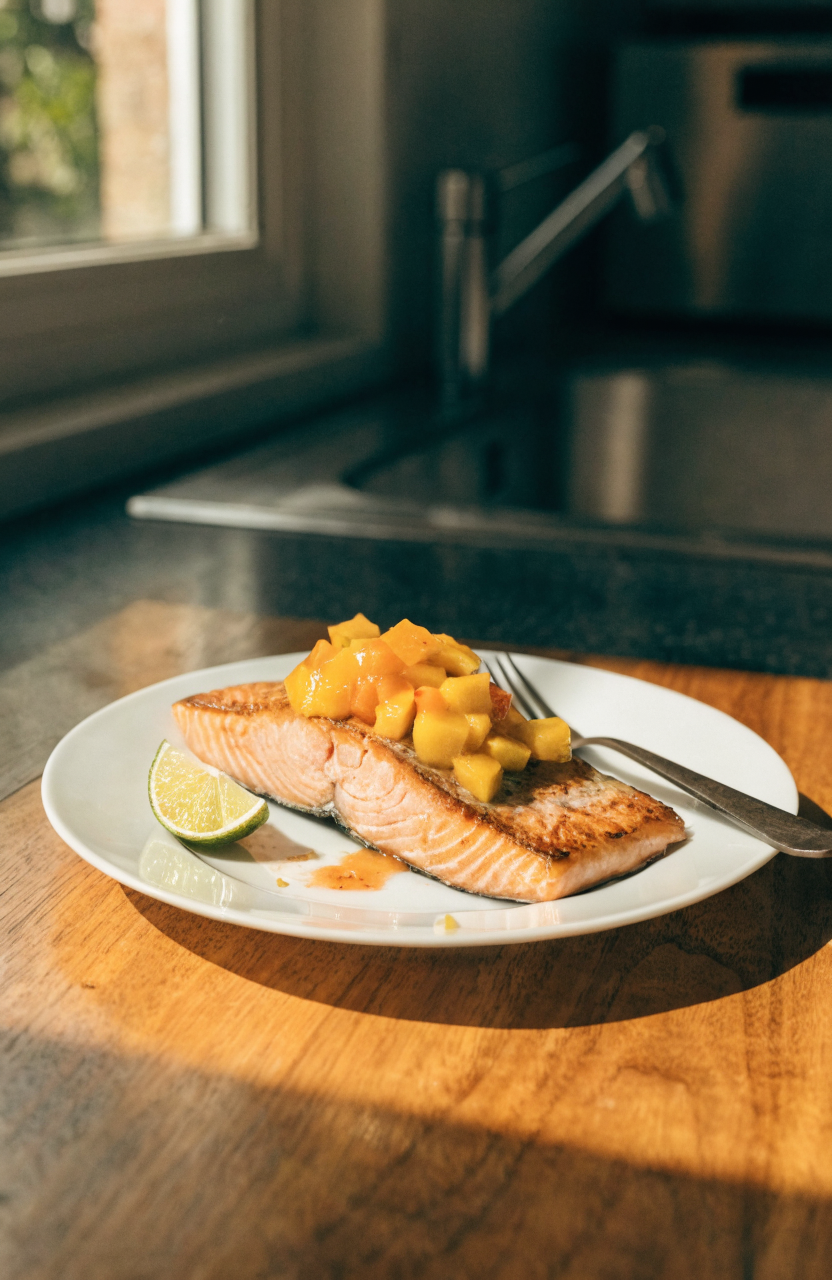
The technique that matters is a short stovetop sear to develop a golden crust followed by a few minutes in a 400°F oven to bring the salmon through evenly without drying. I settled on a roughly 1-inch-thick fillet and a 2:1 ratio of mango to onion in the salsa; the sweetness of the mango balances the salmon while the onion, lime, and cilantro add punch. Early versions either had the salsa water down the fish or left the salmon overcooked; finishing in the oven fixed doneness and making the salsa 10–20 minutes ahead prevented excess liquid from forming.
Key takeaways
- Short sear then oven finish gives consistent doneness and a crisp exterior.
- Make salsa slightly ahead and drain any excess juices to prevent sogginess.
- Use an instant-read thermometer for reliable doneness: 125–130°F for medium-rare, 140°F for well-done.
Ingredients you’ll need and what to substitute
This recipe keeps the ingredient list compact so you can pick everything up on one grocery run. Fresh mango is the centerpiece; use a firm-ripe mango (not fully mushy) so the salsa has texture. Red onion brings sharpness—if you only have yellow onion, use half the amount and soak it briefly in cold water to soften the bite. I use lime juice for brightness; if you prefer a milder acid, use half lime and half orange juice, but that will add sweetness, so reduce any added honey.
Salmon: the recipe uses skin-on, boneless salmon fillets about 6 ounces each for even cooking. If you only have thicker fillets, increase oven time by 3–5 minutes and check temperature. For an oil alternative, avocado oil works well at high heat; do not use butter for the initial sear because it burns quickly.
Equipment
Essential gear includes a 12-inch skillet (preferably cast-iron or stainless steel) for a reliable sear, a rimmed baking sheet or ovenproof skillet for finishing, and an instant-read thermometer for consistent results. A small mixing bowl and a fine-mesh strainer or paper towel are helpful for draining salsa juices if needed.
How to make salmon with mango salsa
Prep the salsa (10–15 minutes)
Peel and dice one firm-ripe mango into 1/2-inch pieces. Finely dice 1/4 cup red onion, chop 2 tablespoons cilantro, and mince 1 small jalapeño (seeded if you want less heat). In a bowl combine the mango, onion, cilantro, jalapeño, 1 tablespoon lime juice, 1/2 teaspoon lime zest, and a pinch of salt and black pepper. Stir and let rest for 10 minutes so the flavors meld. After resting, if the mango has released a lot of juice, drain briefly through a fine-mesh strainer—this prevents the salsa from making the cooked salmon soggy.
Season and sear the salmon (5 minutes)
Pat four 6-ounce skin-on salmon fillets dry with paper towels and season both sides with 1/2 teaspoon kosher salt and 1/4 teaspoon black pepper each. Heat 1 tablespoon neutral oil (canola or avocado oil) in a 12-inch skillet over medium-high heat until shimmering. Place the fillets skin-side down and press gently for 10–15 seconds to keep the skin flat. Sear without moving for 2–3 minutes, until the skin is crisp and the sides show opaque color about halfway up.
Finish in the oven (5–8 minutes)
Transfer the skillet to a preheated 400°F oven (or move the fillets to a rimmed baking sheet if your skillet isn’t ovenproof). Roast 4–8 minutes depending on thickness and desired doneness: 4–6 minutes for medium-rare (125–130°F internal), 7–8 minutes for medium-well (140°F). Use an instant-read thermometer inserted into the thickest part for accuracy. Let the fillets rest 2 minutes after removing from the oven; the carryover heat raises the temperature slightly.
Assemble and serve (2 minutes)
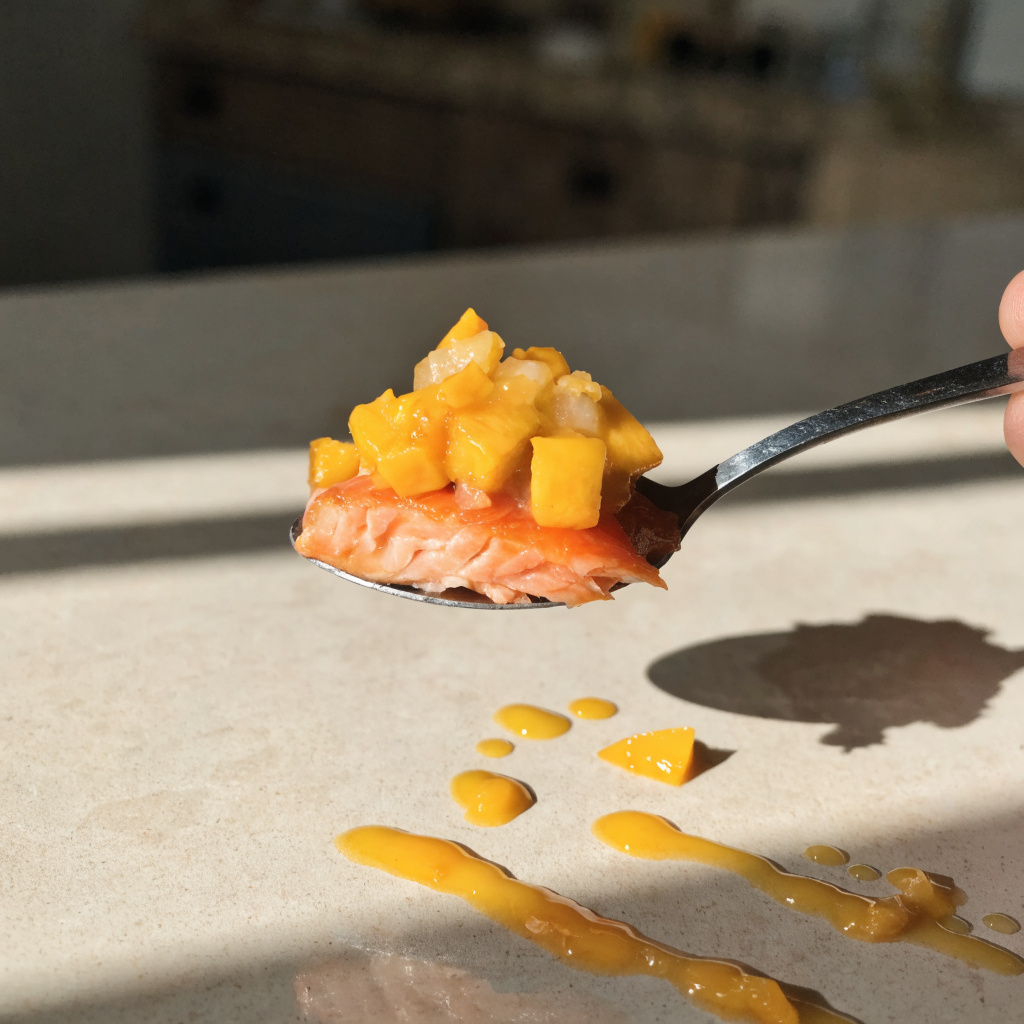
Spoon a generous mound of mango salsa over each rested fillet or serve the salsa on the side. A squeeze of lime over the plated fish brightens the flavors. The entire hands-on assembly takes under three minutes, and the salsa still has fresh texture without running all over the plate if you followed the brief drain step.
Practical tips for dependable weeknight cooking
For consistent results on busy nights, prepare mise en place: dice the mango and onion, measure lime juice, and have your thermometer and skillet ready before you heat the pan. If you prefer to reduce hands-on time even further, make the salsa while the oven preheats and use a timer for the sear and oven finish. When plating multiple servings, spoon the salsa onto a small bowl and let guests serve themselves so any remaining liquid stays contained. These small habits help the finished plates look composed and prevent the juicy mango from pooling on the plate.
Things I learned the hard way
- Don’t skip drying the salmon—wet skin steams, preventing a crisp sear.
- Early attempts had watery salsa; letting the mango sit briefly and draining excessive juice prevents soggy plating.
- Putting the fish in the oven directly from a cold pan drops crust quality; preheat the pan until the oil shimmers for a consistent sear.
- Avoid butter for the initial sear because it can burn at high temperatures; add butter after oven finish if you want richer flavor.
- Using an instant-read thermometer made results repeatable—visual cues alone led to overcooking on busy weeknights.
- First test used thicker mango dice and the salsa felt chunky; 1/2-inch pieces give the best bite balance against the flaky fish.
Variations to try
- Citrus-herb salsa: Substitute half the lime juice with orange juice and add 1 teaspoon finely grated orange zest; this increases sweetness so omit any added honey.
- Spicy mango salsa: Keep the jalapeño seeds and add 1/2 teaspoon chili powder to the salmon seasoning; the oven time remains the same.
- Grilled salmon option: Grill over medium-high heat for 4–6 minutes skin-side down, flip once, and grill 2–4 minutes more depending on thickness; the salsa timing is unchanged.
- Avocado-mango salsa: Fold in 1 diced avocado just before serving; this adds creaminess so serve immediately to avoid browning.
Storage, freezing, and reheating
Refrigerate leftovers separately: salmon in an airtight container for up to 2 days and salsa in a separate container for up to 48 hours. The salsa keeps its texture best when chilled; if it thins a bit, drain a little before serving. I don’t recommend freezing the salsa—mango becomes watery when thawed. To reheat salmon, preheat oven to 300°F, place fillets on a baking sheet, and warm for 8–12 minutes until internal temp reaches 110–125°F depending on desired doneness to avoid drying. Reheated fish will be firmer than freshly cooked but still tasty with fresh salsa spooned on top.
What to serve with salmon with mango salsa
Good pairings that keep the meal efficient: steamed jasmine rice or cilantro-lime rice, a quick green salad with a lemon vinaigrette, roasted asparagus (roast at 425°F for 10–12 minutes), or warm corn tortillas for a casual taco-style plate. Each of these sides can be prepared in the same 30–40 minute window as the salmon for an efficient weeknight dinner. The bright mango salsa also pairs well with grains like farro or quinoa if you want a heartier base.
Seared Salmon with Fresh Mango Salsa
Ingredients
Equipment
Method
- Peel and dice the mango into 1/2-inch pieces and place in a mixing bowl with the diced red onion, chopped cilantro, and minced jalapeño if using.
- Add the lime juice, lime zest, and a pinch of salt and pepper; stir, then let rest for 10–15 minutes so flavors meld and liquid separates slightly.
- If the salsa releases a lot of juice, drain briefly in a fine-mesh strainer or blot with a paper towel to avoid watery plating.
- Preheat oven to 400°F and heat a 12-inch skillet over medium-high until the pan is hot and an instant-read thermometer registers warm (oil will shimmer).
- Pat the salmon fillets dry and season both sides with 1/2 teaspoon kosher salt and 1/8 teaspoon black pepper each (divide remaining salt/pepper as needed).
- Add 1 tablespoon neutral oil to the hot skillet and place fillets skin-side down; press gently with a spatula for 10–15 seconds to maintain contact.
- Sear without moving for 2–3 minutes until the skin is crisp and the sides show opaque color about halfway up the fillets.
- Transfer the skillet to the preheated oven (or move fillets to a rimmed baking sheet if skillet isn’t ovenproof) and roast 4–8 minutes depending on thickness and desired doneness (use an instant-read thermometer): 125–130°F for medium-rare, 140°F for well done.
- Remove salmon from oven and let rest 2 minutes.
- Spoon mango salsa over each rested fillet or serve it on the side; garnish with extra cilantro and a lime wedge. If using avocado, fold it into the salsa just before spooning onto the fish.
Notes
Frequently asked questions
Can I use frozen salmon? Yes—thaw frozen salmon completely in the refrigerator before cooking and pat dry; frozen-thawed fillets may release more moisture so give them extra time to dry for a crisp sear.
How do I know when salmon is done? Use an instant-read thermometer: 125–130°F gives a slightly pink, tender center; 140°F is fully opaque. Visual cues include flaky texture and opaque color moving up from the sides.
Can I make the salsa ahead of time? Yes, make it 1–3 hours ahead and refrigerate. Drain any excess liquid before plating to keep the fish from becoming soggy.
What if my mango isn’t ripe? If the mango is underripe and hard, the salsa will be firm and less sweet; you can add 1 teaspoon honey and a pinch more salt to balance it, but texture will differ.
Can I use other fish? Firm, moderately oily fish like halibut or striped bass work with this salsa, but adjust cooking times—halibut usually needs a longer oven finish.
Is skin necessary? Skin-on fillets help keep the fish intact during searing and add texture; if you prefer skinless, reduce sear time slightly and watch closely to prevent overcooking.
Closing
Salmon with mango salsa is a dependable weeknight recipe when you follow the sear-then-oven approach and mind the salsa’s juices; the result smells bright from citrus, tastes vibrant with the mango and cilantro, and serves quickly—perfect for a busy evening when you still want a thoughtful, flavorful meal. Make the salsa a short time ahead and drain excess liquid if needed, and you’ll have a restaurant-worthy plate with minimal fuss.

Leave a Reply