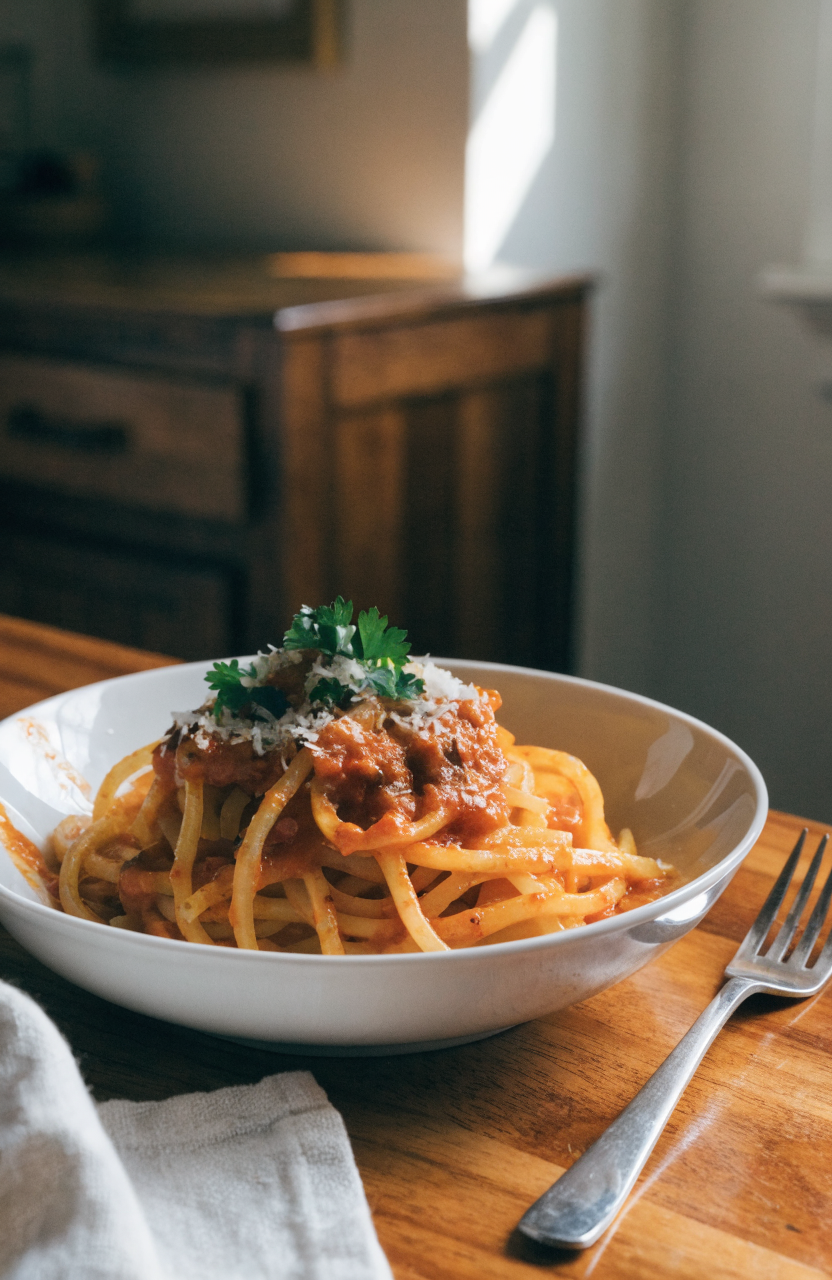
The first time I made spicy spaghetti squash noodles I ended up with a steaming, mushy tangle instead of separate, forkable strands — and that defeat taught me what actually matters: dry strands and a concentrated sauce. I developed this recipe so busy cooks can make spicy spaghetti squash noodles that hold texture, have clear spicy tomato flavor, and come together with a couple of practical shortcuts.
Why this spicy spaghetti squash noodles method works
The trick here is twofold: remove excess moisture from the cooked strands, and concentrate the sauce so it clings without turning the squash soggy. I roast the squash long enough to loosen clean strands but not so long that they collapse, then toss the strands in a skillet over medium heat to steam off surface water before adding the sauce. For the sauce I use sautéed onion, garlic, canned crushed tomatoes, and a chile paste (or crushed red pepper) plus a splash of vinegar to brighten — a concentrated, slightly reduced sauce gives you bold flavor without watering down the squash. During testing I initially simmered the sauce into the squash directly, which made the dish soggy; finishing the sauce separately and briefly pan-tossing the strands fixed that. The result is spicy spaghetti squash noodles that taste like a light, spicy pasta dish and still feel like vegetables.
Key takeaways
- Roast until strands loosen, then release surface moisture in a skillet.
- Finish and reduce the sauce separately so it clings without turning squash watery.
- Use a vinegar or lemon squeeze at the end to lift the flavors.
Ingredients you’ll need and what to substitute
Most ingredients are pantry staples: spaghetti squash, canned tomatoes, an aromatic base (onion and garlic), and a source of heat. I use tomato crushed or passata because it reduces faster than chunky diced tomatoes and gives a smoother coating. For the heat you can use a chile paste like sambal oelek or go with crushed red pepper flakes; the paste gives more rounded chili flavor and a bit of body. Olive oil provides flavor and helps the sauce cling, but a neutral oil works if you prefer. I include grated Parmesan as an optional finishing ingredient for a savory note; omit it for a dairy-free plate and sub a tablespoon of nutritional yeast if you want a cheesy hint.
Substitutions that work:
- If you don’t have roasted squash time, poke the squash and microwave for 8–10 minutes to soften, then finish strands on the skillet to dry — this saves about 20 minutes but slightly changes the texture.
- If you only have diced tomatoes, blend them briefly and cook a touch longer to reduce moisture.
- For milder heat, halve the chile paste and increase black pepper instead.
Equipment
Essential tools are simple and common:
- 1 large rimmed baking sheet (half-sheet works)
- 12-inch skillet (nonstick or stainless steel)
- Sharp chef’s knife and a fork for shredding strands
- Mixing bowl and a fine-mesh sieve or towel for draining
How to make spicy spaghetti squash noodles
Roast and prepare the squash
Preheat the oven to 425°F. Halve a medium spaghetti squash lengthwise and scoop out the seeds; brush the cut sides with 1 tablespoon olive oil and sprinkle with salt. Place cut-sides down on a rimmed baking sheet and roast 35–40 minutes until the flesh is tender and you can easily scrape long strands with a fork. Let the halves cool 5 minutes so they’re safe to handle, then use a fork to release the strands into a mixing bowl. If strands feel very wet, spoon them into a fine-mesh sieve or spread them on a clean kitchen towel and blot gently to remove surface moisture — this step prevents a watery final dish.
Make the spicy tomato sauce
While the squash roasts, heat a 12-inch skillet over medium heat and add 2 tablespoons olive oil. Sauté 1 small diced onion until translucent, about 5–6 minutes, stirring so it doesn’t brown. Add 3 cloves minced garlic and cook 30 seconds until fragrant. Stir in 1–2 tablespoons chile paste (or 1 teaspoon crushed red pepper flakes for a milder kick) and cook 20–30 seconds to bloom the spice. Pour in one 14-ounce can crushed tomatoes, 1 teaspoon dried oregano, 1/2 teaspoon smoked paprika, and 1/2 teaspoon salt. Bring to a simmer and cook 8–10 minutes until slightly reduced and bright. Taste and add 1 teaspoon apple cider vinegar or a squeeze of lemon to balance the tomatoes; adjust salt and heat to preference.
Toss and finish
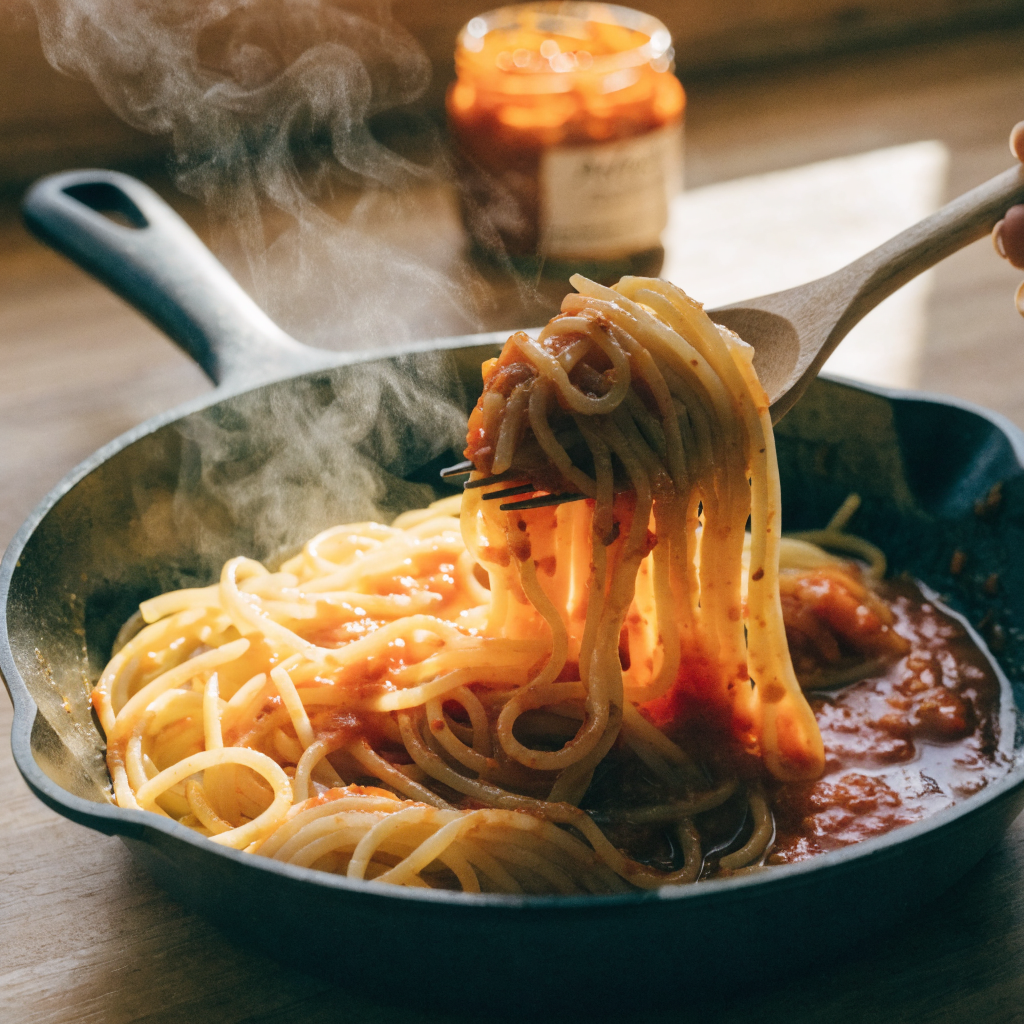
Wipe the skillet clean and return it to medium-high heat with 1 teaspoon olive oil. Add the drained spaghetti squash strands and toss, heating 2–3 minutes to evaporate residual moisture — you should see faint steam, and the strands will become a bit glossy but not limp. Pour the reduced spicy tomato sauce over the squash and fold gently, cooking 1–2 minutes more so the sauce clings. Finish with 2 tablespoons chopped fresh parsley or basil and, if using, 1/4 cup grated Parmesan stirred in off the heat. Serve immediately with extra chile paste on the side for those who want more heat.
Timing note: active hands-on time is about 25 minutes; total time, including roasting, is 60 minutes.
Things I learned the hard way
- Don’t stir sauce into hot squash in the roasting pan — it traps steam and makes everything soggy. Finish the sauce in a skillet first.
- If you skip the brief skillet-dry step the squash will taste watered-down; a 2–3 minute pan toss makes a surprising difference.
- Over-roasting until the squash collapses gives soft, mashed strands; remove when a fork easily loosens long strands but the flesh still holds its shape.
- Using crushed tomatoes keeps the sauce smooth and reduces faster than diced tomatoes.
- Microwaving the whole squash saves time but yields slightly softer strands; I recommend it only when you’re pressed for time.
- First attempt mistake: I used raw garlic in the sauce and didn’t simmer long enough — the raw bite clashed with the squash. Longer sautéing and a splash of vinegar fixed the balance.
Variations to try
- Green chile and lime: swap crushed tomatoes for a half can of green enchilada sauce and reduce the chile paste; finish with juice of 1 lime and cilantro instead of parsley. Cook time is the same.
- Mushroom and herb: add 8 ounces sliced cremini mushrooms sautéed until browned before the onion, increase oregano to 1 1/2 teaspoons, and omit the chile paste for a milder earthy version; you may need an extra minute for moisture evaporation.
- Italian sausage-style: brown 1/2 pound ground turkey or chicken with a teaspoon fennel seed and add to the sauce; drain any excess fat before combining and reduce sauce 1–2 minutes longer to account for extra moisture.
- Cheesy bake: transfer the finished sauced squash to a 9×9 baking dish, top with 1/2 cup shredded mozzarella, and broil 2–3 minutes until bubbly and browned — watch carefully to avoid drying.
Storage, freezing, and reheating
Refrigerate leftover spicy spaghetti squash noodles in an airtight container for up to 4 days. The squash will absorb some sauce and soften when chilled; to revive texture, reheat gently in a skillet over medium heat with a teaspoon of olive oil and a splash of water or broth, tossing until warmed — 4–6 minutes. Freezing is not recommended: thawed squash becomes watery and loses strand separation.
What to serve with spicy spaghetti squash noodles
This dish works as a main for lighter dinners or as a side. Good pairings include:
- Simple green salad with lemon vinaigrette
- Garlic-roasted broccoli or charred green beans
- Crusty bread or a slice of focaccia to sop up sauce
- Grilled chicken or baked salmon for extra protein
Spicy Spaghetti Squash Noodles with Quick Tomato-Chile Sauce
Ingredients
Equipment
Method
- Preheat the oven to 425°F. Brush cut sides of the spaghetti squash with 1 tablespoon olive oil and sprinkle with 1/2 teaspoon salt; place cut-side down on a rimmed baking sheet and roast 35–40 minutes until a fork easily releases long strands.
- Let the squash cool 5 minutes, then use a fork to scrape strands into a mixing bowl; if the strands feel wet, spread them on a clean towel and blot or place in a fine-mesh sieve to drain briefly.
- While the squash roasts, heat 2 tablespoons olive oil in a 12-inch skillet over medium heat. Sauté diced onion 5–6 minutes until translucent, add minced garlic and cook 30 seconds, then stir in chile paste or red pepper and cook 20–30 seconds.
- Add crushed tomatoes, oregano, smoked paprika, and 1/2 teaspoon salt. Bring to a simmer and cook 8–10 minutes until slightly reduced and bright. Stir in apple cider vinegar or lemon juice and adjust seasoning.
- Wipe the skillet clean, return to medium-high, and add 1 teaspoon olive oil. Toss the drained spaghetti squash strands 2–3 minutes to evaporate surface moisture and warm through.
- Pour the reduced sauce over the strands and fold gently for 1–2 minutes so the sauce clings. Stir in chopped herbs and optional Parmesan off the heat. Serve immediately with extra chile paste on the side.
Notes
Frequently asked questions
Can I make this ahead of time? Yes. Keep the sauce and squash separate in the fridge for up to 3 days and combine briefly in a skillet when ready to serve to preserve texture. If mixed and chilled together, the squash will soften more.
Can I use frozen spaghetti squash? Cooked frozen squash is okay, but drain and pan-dry thoroughly; frozen-thawed strands tend to be wetter and need more time to evaporate moisture.
How long do I roast the squash? Roast at 425°F for 35–40 minutes for a medium squash; check at 30 minutes and test with a fork — you want long strands, not collapsed flesh.
What if my squash is watery after roasting? Spread the strands on a towel and blot, or toss briefly in a hot skillet to evaporate surface water before adding sauce.
Can I make this less spicy? Yes. Start with half the chile paste or omit it and add crushed red pepper at the table. You can also add a splash more tomato and a pinch of sugar to balance heat.
Is this recipe gluten-free? The base ingredients are naturally gluten-free, but check your chile paste and any packaged ingredients for cross-contamination if you need strict gluten-free assurance.
Closing
Spicy spaghetti squash noodles give you a lighter, vegetable-forward version of saucy pasta without losing the saucy bite — by roasting just enough to release strands and finishing the sauce separately, this method yields flavorful, non-soggy results every time. For leftovers, keep components separate and reheat gently so the strands stay distinct; the final dish is a practical weeknight solution that still feels like a composed meal.

Leave a Reply